Beginner’s Guide to Recording a Neighbor’s Story on Your Phone
The first recording is the hardest. You will worry about the phone, about your questions, about whether you are even allowed to ask. Your neighbor will worry about the same things, plus how their voice sounds on playback. None of it matters as much as you think. What matters is that someone three doors down remembers how the courtyard sounded before the trees came down, and none of that is written anywhere yet. A phone, a kitchen table and forty unhurried minutes will hold it. Everything else is habit — small ones, easy to learn, and worth having in place before you knock.
The Setup You Already Have
Skip the equipment list. The microphone built into a modern phone, used in a quiet room, is good enough to capture two voices clearly. What ruins a first recording is rarely the hardware. It is the fridge, the chair, the phone sitting flat on a hard table picking up every knuckle knock.
Start with the room. Kitchens and living rooms are fine; bathrooms, hallways and rooms with bare floors are not. Listen for a moment with the phone idle. That low hum is the refrigerator, and it will sit underneath the whole conversation. If you can unplug it or move to another room, do. Turn off the television and the radio, not just down. Silence the phone's notifications — airplane mode is simplest, and it also stops a call from cutting your recording short.
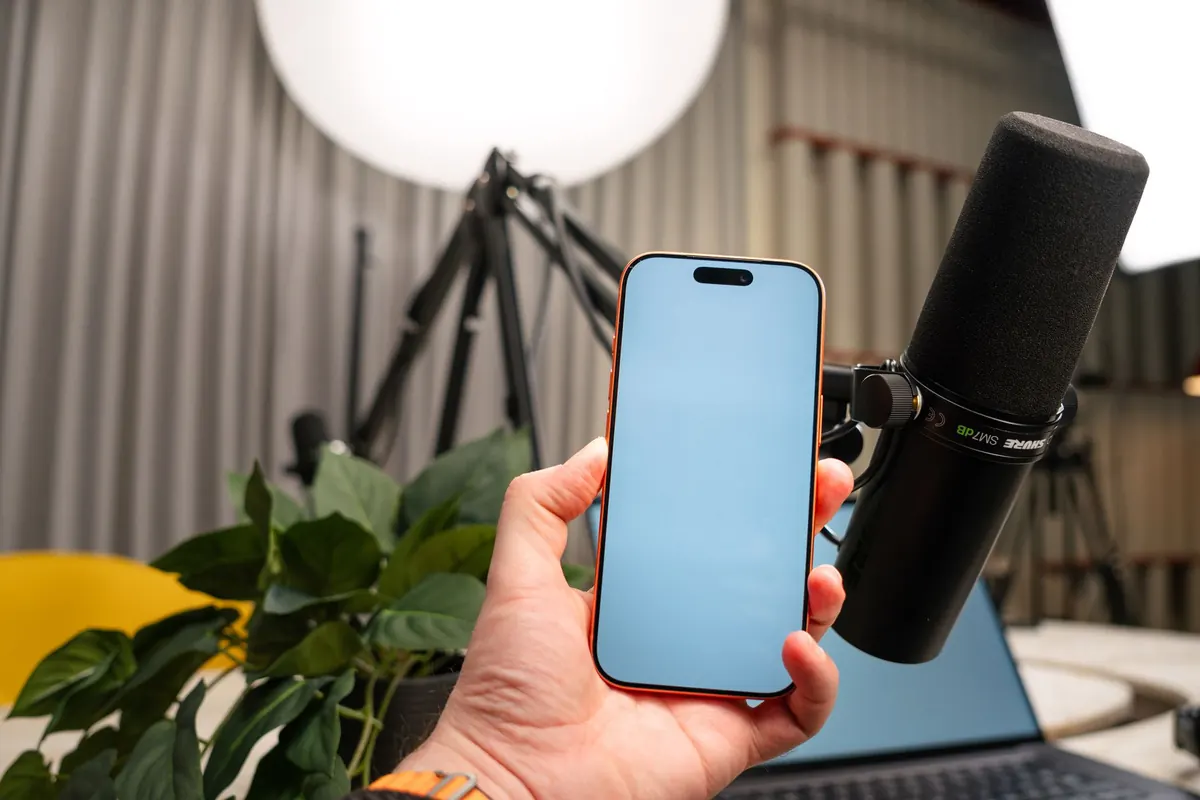
Then place the phone. Set it on something soft rather than directly on wood or stone: a folded cloth, a paperback, a placemat. Keep it an arm's length away and slightly closer to your neighbor than to you, angled toward their mouth. Their voice should be the loudest thing on the file; your questions can be quieter.
Use the voice memo app rather than video. Audio files are smaller, easier to copy, and easier for someone else to listen to later. Check that you have storage space before you sit down — a nearly full phone will stop recording at the worst moment.
Two things worth avoiding. Bluetooth earbuds, because they switch to a thin, call-quality sound the moment you record. And a phone lying between two people on a table, where it picks up cups, cutlery and both voices at equal volume.
Finally, test. Record thirty seconds of your neighbor saying their name and where they grew up, then play it back so they can hear it too. It takes a minute, and it does something useful: it makes the recording a shared object rather than something being done to them.
Ask Before You Press Record
Consent does not need to be a form. It needs to be clear, spoken out loud, and specific about what happens afterwards. Say it before the phone is on the table, so nobody feels cornered by a device that is already running.
“I'd like to record our conversation so I get your words right, not my version of them. The file stays with me, and I'll make you a copy. If we ever want to share part of it, I'll ask you again first. If you'd rather I stop at any point, just say stop and I'll turn it off. Is that all right?”
Then say it once more with the recorder running. State the date, your name, their name, and their permission in one sentence. It feels awkward for about four seconds and then it becomes the most valuable thirty seconds of the file.
Notice that the script separates two questions people often blur: may I record, and may I share. Keep them separate. A neighbor may be perfectly happy to talk for an hour and not want a word of it on a website. Both answers are reasonable, and both should be easy to give.
Agree in advance about other people. Neighbors often tell stories that belong partly to somebody else — a brother, a landlord, a family that moved away. Ask what should stay out, and keep a note of it.
One sensible caution: rules about recording conversations and publishing other people's words vary from place to place, and they get more complicated once a recording leaves the family kitchen. If a story is going to be shared publicly, or touches on someone's private affairs, ask someone who knows the local rules before you publish. That is a short conversation, not a legal crisis, but it is worth having early.
A Question Order That Keeps a Story Moving
Good interviews move from the outside in. Start with places and dates they can answer without thinking, then daily life, then change, then feeling. By the time you reach the personal questions, the room has warmed up and the easy answers have built a foundation.
- Where were you born, and when did your family arrive on this street?
- What did this block look like when you first saw it — the shops, the light, the noise?
- Walk me through an ordinary Saturday morning back then. Where did you go first?
- Who were the neighbors you saw every day? What were their names?
- What did people do for work around here?
- When did the street start to change? What did you notice first?
- What do you miss that is completely gone now?
- What are you glad is gone?
Ask one question at a time and then stop talking. Beginners ask a question and, uncomfortable with the pause, add two more; the neighbor answers the easiest of the three. When an answer arrives, let it land. Count to five before you speak again.
Follow the tangent. If they mention a courtyard that worked like a second kitchen, abandon your list and ask about the courtyard. The plan is a floor, not a fence.
Repeat their words back to them. “You said the courtyard was a second kitchen — tell me what got cooked out there.” This works better than any clever question you could invent, because it uses their language instead of yours. And resist correcting details while recording. If they say 1962 and you think it was 1963, write it down and check later.
Small Habits That Save a Recording
Capture room tone
At the end, ask for thirty seconds of quiet with the recorder still running. It gives anyone editing later a sample of the background hum to work with, and it costs nothing.
Have an interruption plan
Someone will ring the doorbell or the dog will bark. Agree beforehand on a simple signal — one clap, or “let's pause” — and start again from the sentence where you stopped. Unedited gaps are easy to cut; lost sentences are not.
Say the details out loud
If they bring out a photograph, ask them to describe it while the phone is recording. At the end, ask them to spell the names and street names they mentioned. A file where the names are audible is worth three files where they aren't.
Back Up Before You Leave the Driveway
Phones get dropped, sat on, left in coat pockets and washed. One copy is not a copy. Do this while you are still in the neighborhood, ideally before you get home and get distracted.
- Stop the recording properly and check that the file exists and plays.
- Send it to yourself by email or save it to a cloud folder, then confirm it appears there.
- Copy it to a second place — a laptop, a USB stick, an external drive.
- Do not delete the original from the phone until two other copies exist.
- Rename it the same day: date, name, street. “2024-05-11 Ferraro courtyard” beats “Recording 14.”
Send your neighbor their copy as promised, even if it is just a message with a file attached. It is the difference between a person who was interviewed and a person who was heard.
The Evening After: Three Small Jobs
Before you go to bed, write five lines of notes: what surprised you, what you want to ask next time, what they asked you to leave out, and any date or name you need to check. Nothing formal. Then send a short thank-you message, repeating plainly what you will and will not do with the recording.
That is the whole method. Quiet room, phone on a folded cloth, permission said twice, questions ordered from place to feeling, two copies of the file, one honest thank-you. Do it once and the second conversation will feel easier, because the habits will already be in place and you can spend the hour doing the only part that really matters: listening.
Photo: Jakub Zerdzicki / Pexels